


April 30, 2026
From Weather Alerts to Action Plans: Closing the Gap Between Forecasts and Field Response
A severe weather alert is issued. Notifications are sent. Dashboards light up with warnings. Yet, at the property
Read More
In many regions, roofs are exposed to multiple hail events across seasons and years. Recent industry data indicates that around 43 million properties across the United States face at least moderate exposure to damaging hail. The financial implications have also intensified, with some hail events now producing losses comparable to those associated with Category 4 hurricanes.
In fact, the potential reconstruction costs tied to widespread hail damage have been estimated in the trillions, highlighting how significant and far-reaching the issue has become.
A single hailstorm can leave visible marks on a roof, but the greater concern often lies in what happens over time. What begins as slight granule loss or minor surface bruising can develop into moisture intrusion, weakened structural components, and reduced performance. By the time interior signs appear, the underlying damage has often progressed further than expected.
Understanding how repeated hail exposure affects roofing systems helps property owners make informed decisions about maintenance, inspections, and commercial restoration services. A closer look at the mechanics of hail impact and long-term material degradation reveals why proactive attention plays such an important role in protecting a commercial building.

When hailstones strike a roof, the force of impact is determined by their size, density, and velocity. Larger stones carry more kinetic energy, while smaller hail can still cause damage when driven by strong winds. Upon contact, energy is transferred directly into the roofing material, resulting in compression, displacement, or fracturing.
Different materials respond in different ways. Asphalt shingles may experience surface bruising or granule displacement. Metal panels can dent without immediate loss of function. Tile and slate may crack or break under sufficient force.
In each case, the initial damage may appear localized, yet the integrity of the material has already been altered.
Some forms of hail damage are easy to identify. Dents, cracks, and missing granules often provide clear evidence of impact. However, a significant portion of the damage remains less visible. Microfractures within shingles, subtle weakening of sealant strips, and minor displacement of flashing components can occur without immediate signs.
Hidden damage is where long-term issues often begin. Even when a roof appears intact after a storm, its ability to resist future impacts and environmental stressors may already be reduced.
Repeated hail exposure introduces a compounding effect. Each storm adds stress to materials that may already have been weakened. Minor imperfections created during one event can become points of failure during the next.
The accumulation of small-scale damage results in a measurable decline in performance. Protective layers become thinner, sealants lose adhesion, and structural connections may loosen. The roof’s ability to shed water efficiently is gradually reduced.
Material fatigue plays a key role in long-term deterioration. Roofing components are designed to withstand environmental stress, yet repeated impact accelerates the aging process. Asphalt shingles, for example, rely on flexibility to absorb impact. As flexibility diminishes, the likelihood of cracking increases.
The process is often gradual. A roof that performs well after one storm may respond differently after several years of repeated exposure. The transition from minor wear to functional impairment can occur without a clear turning point, making regular evaluation essential.
Shingles serve as the first line of defense against hail. Repeated impacts can dislodge protective granules, exposing the underlying asphalt to ultraviolet radiation. As granule loss continues, the rate of deterioration increases.
The result is a thinning of the protective surface, along with reduced resistance to both weather and impact. Cracking and curling may follow, particularly in areas that have experienced repeated stress.
Beneath the shingles, the underlayment provides a secondary moisture barrier. While it is not directly exposed to hail, its condition is influenced by the performance of the outer layer. As shingles degrade, the underlayment is subjected to increased moisture exposure.
The process can lead to weakening, tearing, or reduced effectiveness. Once compromised, the risk of water intrusion rises significantly.
Flashing is installed around roof penetrations and transitions to prevent water entry. Repeated hail impact can cause subtle shifts or deformation in these components. Sealants may lose adhesion, and small gaps can develop.
These changes are often difficult to detect during a visual inspection, yet they create pathways for moisture infiltration. Areas around vents, chimneys, and skylights are particularly vulnerable.
The roof deck supports the entire system. While it is protected by the layers above, prolonged exposure to moisture resulting from hail-related damage can lead to deterioration. Wood decking may absorb water, leading to swelling, warping, or rot.
Structural weakening at this level presents a more serious concern. Repairs become more complex, and the overall stability of the roof may be affected if the issue is not addressed.
Not all hail damage presents as obvious impact marks. In many cases, the signs are more subtle. Discoloration, uneven granule distribution, and slight variations in texture may indicate underlying issues. Areas that appear worn or inconsistent should be examined more closely.
Soft spots may also develop, particularly where repeated impacts have weakened the material. These areas may not be immediately visible but can often be detected through careful inspection.
Interior symptoms may appear later in the process. Small ceiling stains, peeling paint, or increased humidity in attic spaces can suggest that moisture has entered the roofing system. Musty odors may also develop as a result of prolonged dampness.
By the time these signs are noticed, the damage has typically progressed beyond the surface layer.
Professional inspections provide a more thorough assessment than visual checks alone. Specialized techniques and experience allow for the identification of early-stage damage that might otherwise be overlooked.
Regular evaluations help track changes and support timely intervention.

The frequency of hailstorms affects the rate of roof deterioration. In regions where hail events occur regularly, the interval between storms may not allow sufficient time for recovery or repair. As a result, damage accumulates more rapidly.
Seasonal patterns can further influence the process. Multiple storms within a short period place additional stress on already weakened materials. Variations in temperature and humidity may also contribute to expansion and contraction, amplifying the effects of impact damage.
Changes in climate patterns have introduced greater variability in storm intensity and frequency. Increased unpredictability highlights the importance of consistent monitoring and maintenance.
Repeated hail exposure can complicate the insurance claims process. When damage develops gradually, it may be difficult to determine when it occurred. Insurers often distinguish between sudden events and long-term wear, and the distinction can affect coverage.
Damage that appears to result from ongoing deterioration may not be treated in the same way as damage from a single documented storm.
Maintaining detailed records supports a stronger claim. Inspection reports, photographs, and maintenance logs help establish a timeline of events. Having documentation can demonstrate that damage was identified and addressed in a timely manner.
A consistent record also provides valuable insight into the condition of the roof, aiding in both maintenance planning and risk management.
Routine inspections are one of the most effective ways to manage hail-related risk. Annual evaluations, along with assessments following significant storms, allow for early detection of damage.
Impact-resistant roofing materials offer enhanced durability. Shingles with higher impact ratings are designed to absorb and disperse energy more effectively.
While no material is entirely immune to damage, impact-resistant options can reduce the extent of deterioration over time.
Ongoing maintenance supports the overall performance of the roofing system. Replacing damaged shingles, resealing flashing, and addressing minor issues as they arise helps preserve structural integrity.
Consistent care extends the lifespan of the roof and reduces the likelihood of major repairs.
In some cases, ongoing monitoring services provide added value. Regular assessments conducted by experienced professionals create a clear record of the roof’s condition. This approach supports informed decision-making and timely intervention.
Determining whether to repair or replace a roof requires careful evaluation. In the early stages of hail damage, targeted repairs may be sufficient. However, as damage accumulates, the effectiveness of repeated repairs may diminish.
Indicators such as widespread granule loss, recurring leaks, and structural concerns suggest that replacement may be the more practical option. A cost comparison often reveals that ongoing repairs can exceed the investment required for a new system.
Acting at the right time helps prevent more extensive damage to the building. A well-timed replacement restores performance and provides a more reliable barrier against future storms.
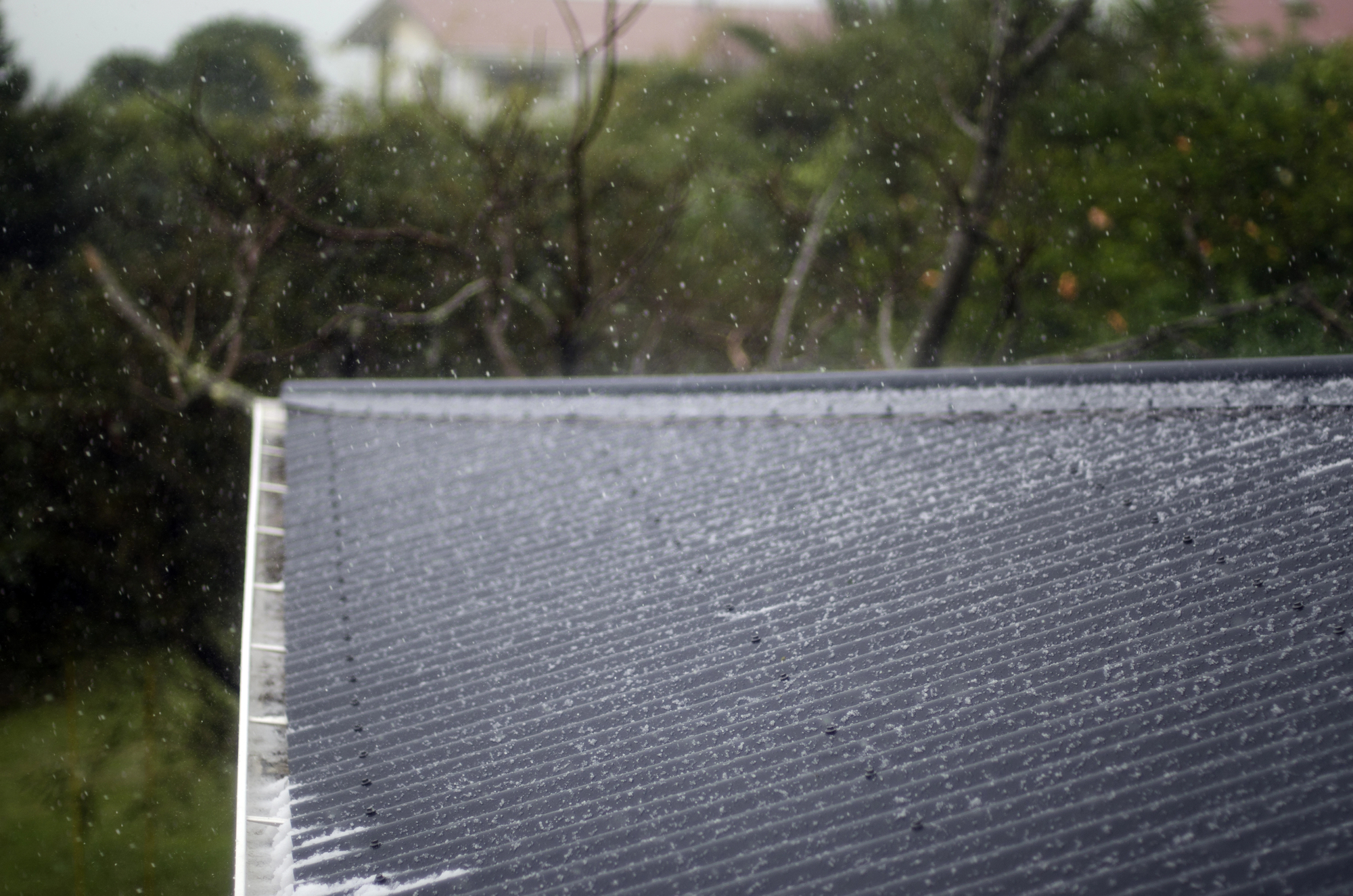
Repeated hail exposure can quietly compromise your roof long before visible issues appear. A professional evaluation provides clarity and helps prevent costly repairs down the line.
Contact BlueTeam today to schedule a comprehensive inspection and access expert support for repairs, roofing solutions, restoration services, and more following hail damage.