High winds are among the most destructive elements of a hurricane—and few parts of a commercial building face greater exposure than the roof. When pressure builds, seams weaken, and debris starts to fly, even small vulnerabilities can lead to operational disruptions and high repair costs.
The roof’s performance during a storm often determines how well the rest of the property holds up. That’s why understanding the effects of hurricane winds on commercial roofing systems matters long before the forecast calls for landfall.
By recognizing how wind forces interact with roofing materials and identifying areas where failure is most likely, building owners can take meaningful steps to reduce damage, minimize downtime, and recover faster.
Understanding Hurricane Wind Forces
Damage to commercial roofs during a hurricane is driven by the interaction between high-velocity wind and exposed structural surfaces.
Hurricane Categories and Wind Speeds
Hurricanes are categorized using the Saffir-Simpson Hurricane Wind Scale, which ranks storms from Category 1 (starting at 74 mph) to Category 5 (exceeding 157 mph). While the highest categories bring catastrophic damage, even a Category 1 storm can cause roof failure, especially if weaknesses already exist.
Wind Pressure and Uplift Effects
When hurricane winds strike a building, they generate both positive pressure (on windward-facing surfaces) and negative pressure, or uplift, on the roof and leeward walls. The uplift effect can pull roofing materials away from the structure, particularly in areas with poor adhesion, loose fasteners, or aging components.
Suction forces are most intense along edges, corners, and roof transitions, where wind flow is accelerated and turbulence increases.
Flat or low-slope commercial roofs are especially vulnerable due to their wide surface area and limited slope for wind deflection. Structures with large parapets, rooftop units, or varying roof heights can also experience turbulent wind behavior, which leads to localized pressure spikes.
Impact from Wind-Borne Debris
In addition to pressure-related forces, wind-borne debris presents another hazard. Items lifted from nearby structures or the roof itself—such as gravel, signage, or broken panels—can impact the surface at high speed, tearing membranes or damaging flashing.
Even roofs that remain intact structurally may experience compromised waterproofing or insulation due to this kind of impact.
Common Types of Hurricane Wind Damage to Commercial Roofs
The effect of hurricane winds on roofing systems tends to follow identifiable patterns. Recognition of these can assist in post-storm assessments and inform more targeted preparation.
Membrane Peeling or Tearing
Wind uplift can cause separation of membrane layers, particularly when mechanical fasteners are spaced improperly or adhesive failure has occurred. Once compromised, progressive tearing may follow as wind intrusion increases pressure beneath the surface.
Flashing Failures
Improperly secured or deteriorated flashing is a frequent source of wind-related failure. These thin metal or membrane strips are designed to protect roof edges, seams, and penetrations, but under wind stress, detachment occurs easily, resulting in water entry paths.
Debris Penetration
Wind-driven debris such as branches, signage, or roofing gravel can puncture the roof membrane. The openings, even if small, often go unnoticed until water damage has already taken place inside the structure.
HVAC and Equipment Displacement
Inadequate anchoring of rooftop equipment can sometimes result in entire HVAC units being dislodged during storms. Beyond structural loss, their detachment may tear the membrane or leave large, exposed roof openings.
Water Infiltration Following Wind Damage
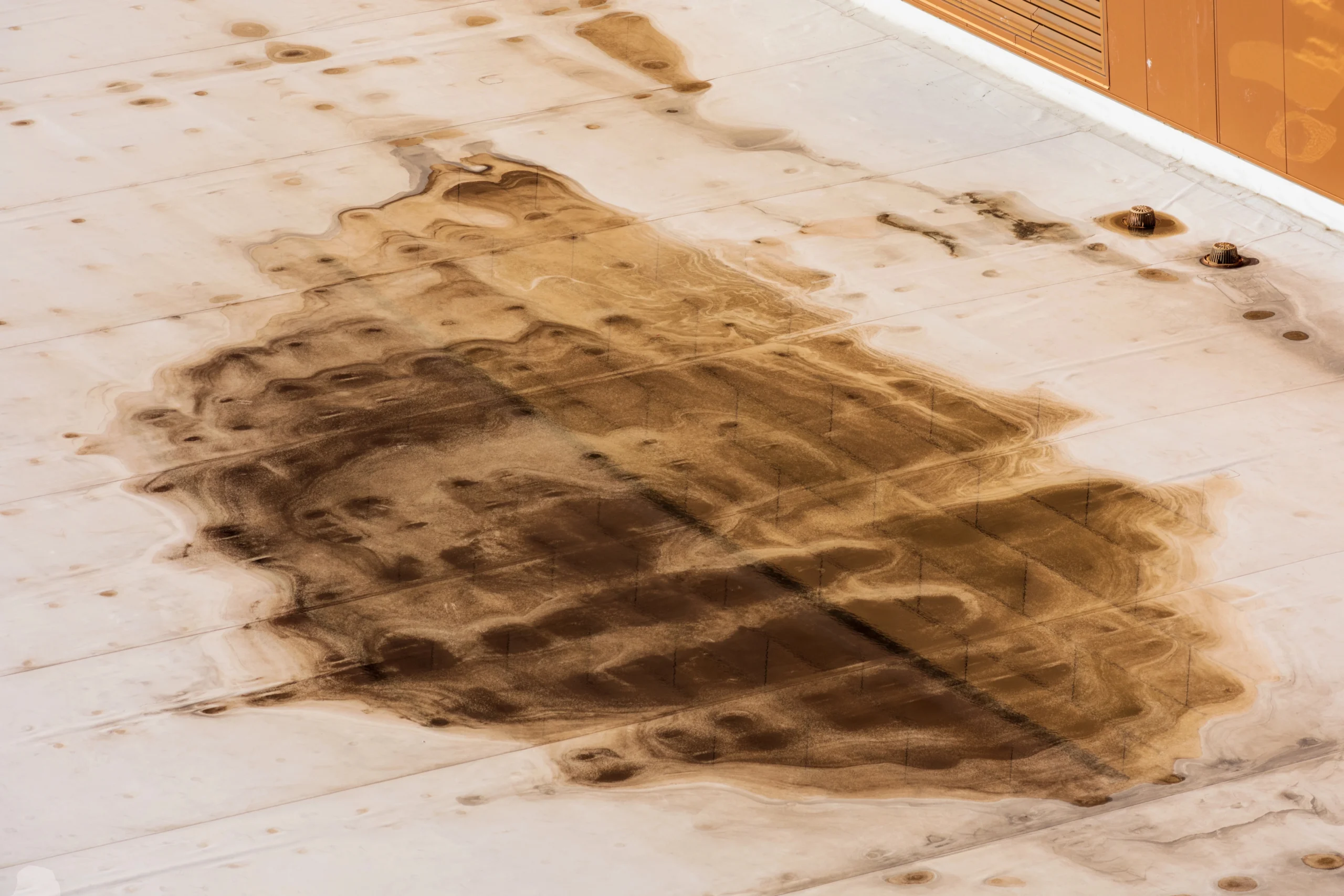
Although caused indirectly, water infiltration often becomes the most damaging consequence of wind-related roof failure. Once protective layers are compromised, water intrusion affects insulation, ceiling systems, and electrical infrastructure.
Risk Factors That Increase Vulnerability
Not all commercial roofs experience the same level of risk. Several factors influence the severity of hurricane damage:
Roof Age and Material Degradation
With time, roofing materials lose flexibility and adhesion. Cracks, seam separation, and brittleness are more prevalent in older systems, reducing their resistance to uplift forces and membrane fatigue.
Improper Roof Installation or Repairs
Incorrect fastener spacing, poorly applied adhesives, or failure to follow manufacturer guidelines significantly decrease a system’s wind resistance. Even minor defects from previous repairs can be amplified under hurricane conditions.
Insufficient Anchoring of Rooftop Components
Equipment left unanchored or loosely attached becomes a hazard during wind events. These objects may not only damage the roof but also neighboring properties.
Blocked Drainage Systems
The accumulation of roofing granules, leaves, or construction debris can block internal drains or scuppers. During a storm, water buildup adds structural weight and contributes to membrane detachment.
Exposure Based on Building Location and Height
Structures in coastal zones, on open lots, or of above-average height face higher wind loads. Edge zones, parapets, and transition points between roof levels must be reinforced accordingly.
Steps to Prepare Your Commercial Roof Before a Hurricane
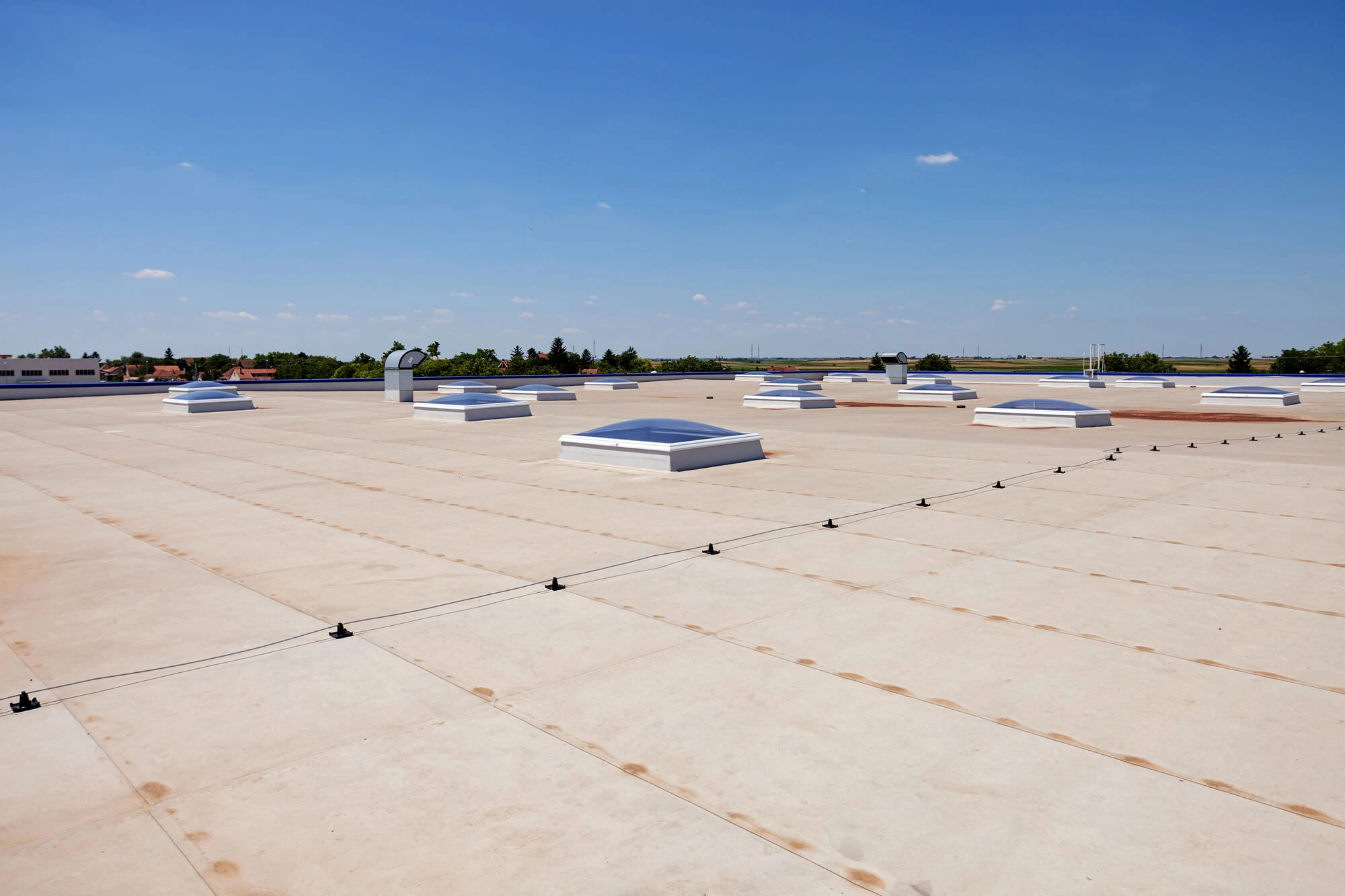
Preparing a commercial roof for hurricane winds requires targeted structural measures designed to withstand extreme weather forces. Each step is thought to strengthen the roof system and minimize potential damage.
Schedule a Pre-Storm Roof Inspection
A thorough inspection by a qualified roofing professional identifies existing weaknesses before the storm hits.
Inspecting the membrane, flashing, fasteners, and penetrations helps uncover issues like seam separation, cracks, or loose attachments that could fail under wind stress. Early detection allows for timely repairs that improve roof resilience.
Secure Loose Items
Unsecured rooftop equipment and debris risk being torn away and can become dangerous projectiles that damage the roof and surrounding property.
Fastening or removing signage, tools, and loose materials reduces windborne hazards. Securing HVAC units, satellite dishes, and solar panels with hurricane-rated anchoring systems also prevents uplift and displacement during strong gusts.
Reinforce Flashing and Edges
Roof edges and flashing are critical defense points against wind uplift, as wind pressures are highest along perimeters and corners. Reinforcement using stronger fasteners, continuous edge metal systems, or wind-rated flashing materials prevents detachment.
Properly installed and reinforced flashing maintains the roof’s waterproofing integrity even under severe wind loads.
Clear Gutters and Drains
Efficient drainage prevents water accumulation that can add weight and stress to the roof structure during heavy rainfall. Clearing gutters, scuppers, and internal drains of leaves, gravel, and debris ensures water flows freely away from the roof surface.
Blocked drainage can cause ponding, which increases the risk of membrane failure and structural damage.
Install or Inspect Hurricane Anchoring Systems
Anchoring rooftop equipment with hurricane-rated straps, bolts, or tie-downs is essential to prevent equipment displacement. Loose or inadequate anchoring can cause rooftop units to shift or become airborne, leading to membrane punctures and extensive roof damage.
Retrofitting older roofs with updated anchoring systems improves overall storm resilience.
Reinforce Roof Deck Connections
The connection between the roof deck and the supporting framing is a key factor in resisting uplift forces. Strengthening these connections through additional fasteners, hurricane clips, or metal connectors increases the roof’s structural integrity.
Especially for metal decks or wooden framing, ensuring these components are securely fastened reduces the risk of roof blow-off during high winds.
Upgrade Perimeter and Parapet Systems
Parapet walls and perimeter terminations face concentrated wind pressure and require special attention. Inspecting for cracks, loose coping, or separation helps identify weak spots.
Reinforcing parapet anchors and installing wind-rated coping systems reduces the chances of detachment, limiting wind infiltration beneath the roofing membrane.
What to Do After the Storm: Damage Assessment & Reporting
Timely and thorough inspection following a hurricane is critical for limiting further damage and ensuring a smooth restoration process. Knowing what to look for and how to respond helps property managers take control during a challenging time.
Initial Visual Inspection
Once the storm has passed and it’s safe to access the property, conducting a careful and systematic roof inspection becomes a priority.
The first step is to look for visible signs of damage—this includes tears or lifting in the membrane, sections of flashing that have come loose or bent, and areas where water may be pooling or ponding.
Evaluating Equipment and Hidden Damage
Any rooftop equipment that appears to have shifted or loosened should be closely examined, as even small movements can indicate underlying structural issues.
Minor punctures or holes in the roofing membrane might seem insignificant but can lead to major water infiltration if left unaddressed. Early documentation of these problems is crucial for accurate insurance claims and repair planning.
Professional Temporary Repairs and Documentation
Professional roofing contractors are best equipped to perform these inspections and to safely carry out temporary protective measures. Actions such as installing tarps, sealing openings, or removing debris should be handled promptly to prevent further deterioration until permanent repairs or restoration can be completed.
Having a trusted roofing partner ready to respond after a storm ensures that damage is properly assessed and addressed.
Schedule a Commercial Roofing Assessment Before the Next Storm
Preparation today prevents emergency repairs tomorrow. BlueTeam offers comprehensive commercial roof inspections, pre-storm readiness assessments, and preventive reinforcements designed to reduce risk during hurricane season.
Should damage occur, our team also provides emergency restoration services and full roof replacement solutions to get your facility operational as quickly as possible.
Contact BlueTeam today to schedule your inspection and start your property’s hurricane readiness plan.