The condition of a commercial roofing system has a direct impact on occupant safety, regulatory compliance, and long-term asset performance.
When signs of deterioration emerge, such as persistent leaks, membrane degradation, or punctures, determining whether reroofing or full replacement is the appropriate course of action requires careful evaluation.
And with hail season underway, the likelihood of damage—and the urgency for accurate roof decisions—only increases. According to ZestyAI, a firm specializing in property and climate risk analytics, over 12.6 million properties in the US are at high risk of hail-related roof damage, with potential replacement costs estimated at $189.5 billion.
While both reroofing and replacement aim to restore protection and functionality, each carries distinct technical, financial, and operational implications for commercial roofing in Florida and across the US.
What Is Reroofing?
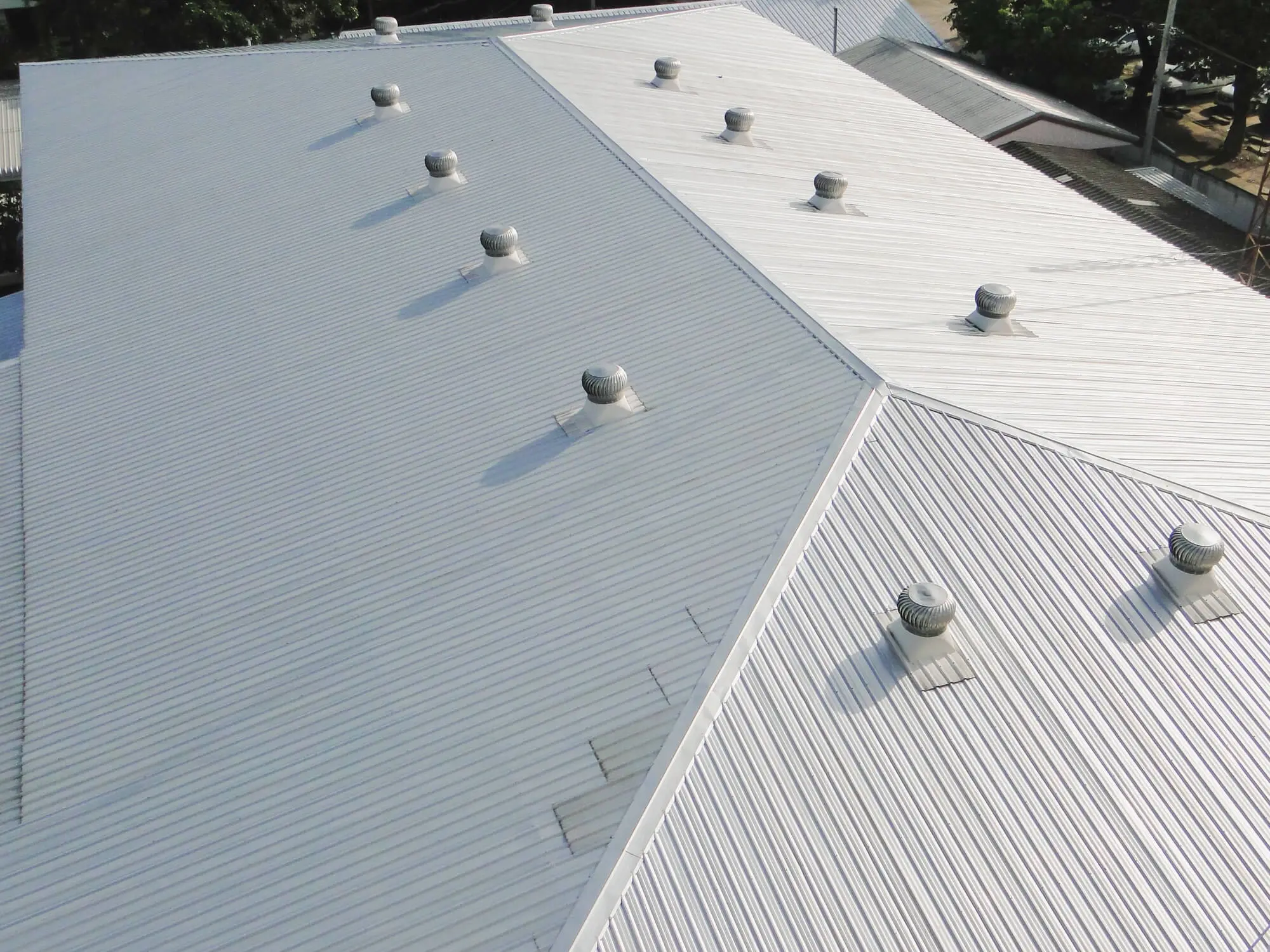
Reroofing, also referred to as an overlay, involves the installation of a new roofing membrane or system directly over an existing roof, without the removal of the original material.
In most jurisdictions, building code regulations allow for a single reroofing layer, provided the existing system is in acceptable structural condition and shows no signs of moisture entrapment or significant substrate failure.
Reroofing is commonly performed using thermoplastic polyolefin (TPO), ethylene propylene diene monomer (EPDM), or modified bitumen systems, depending on the existing substrate and local environmental conditions.
Advantages of Reroofing
- Reduction of labor intensity is achieved due to the absence of full removal.
- Minimization of downtime allows for continued business operations with limited interference.
- Initial cost containment is typically realized through reduced materials and installation hours.
Limitations of Reroofing
- Concealment of underlying damage may result in the persistence or escalation of water infiltration or deck corrosion.
- Restriction by local codes may prohibit a second layer or require removal due to fire classification standards.
- Diminished lifecycle extension is commonly observed when existing degradation remains unaddressed beneath the new surface.
Understanding Roof Replacement
Roof replacement involves a complete tear-off of the existing roofing materials down to the structural deck, followed by inspection, necessary remediation, and the installation of a new roofing system.
The process allows for a comprehensive evaluation of the decking, vapor barrier, insulation, and drainage systems. It may also incorporate upgrades in insulation (meeting new R-value requirements), slope corrections, and improved flashing integration.
Replacement is commonly selected when the existing system has reached the end of its service life, or when substantial damage, saturation, or code violations are present.
Advantages of Roof Replacement
- Full access to the substrate allows for the identification and remediation of hidden damage.
- Improved thermal performance may be achieved through the addition of new insulation or other high-R-value materials.
- Extension of service life is significantly greater than that of a typical re-roofing system.
- Eligibility for extended warranties is often contingent upon full replacement.
Limitations of Roof Replacement
- Higher capital expenditure is expected due to the scope of removal, disposal, and labor.
- Extended construction timelines may necessitate coordination with building occupants and stakeholders.
- Increased disruption potential exists during tear-off phases, particularly in multi-tenant or mission-critical facilities.
Factors to Consider When Deciding Between Reroofing and Roof Replacement
Choosing between reroofing and full roof replacement is not simply a matter of cost or convenience. For commercial property owners, the decision affects structural performance, code compliance, long-term costs, and building value.
A thorough evaluation of the existing system’s condition, regulatory landscape, and long-term goals is necessary before moving forward.
1. Condition of the Existing Roof System
The current condition of the roof is the most influential factor in determining the feasibility of reroofing.
A comprehensive inspection should assess:
- Moisture infiltration: When moisture becomes trapped within the roofing system, it can degrade thermal performance, promote mold growth, and cause corrosion of the deck.
- Fastener integrity: If fasteners have loosened or failed, the membrane may shift or lift under wind pressure, reducing the roof’s ability to resist uplift and potentially compromising structural integrity.
- Insulation and membrane condition: Crushed or water-saturated insulation and brittle, cracked, or blistered membrane surfaces indicate reduced energy efficiency and an increased likelihood of leaks or full system breakdown.
If damage is limited and the structural deck remains dry and stable, reroofing may be a viable solution.
However, if moisture is widespread, the insulation has lost its R-value, or there is evidence of chronic ponding water, full removal and replacement are typically warranted.
2. Roof Age and Service History
Most commercial roofing systems—whether TPO, EPDM, modified bitumen, or BUR—are designed to last between 20 and 30 years, depending on material type, installation quality, and exposure conditions.
A roof approaching or exceeding that range is unlikely to benefit from reroofing, especially if previous repair records indicate ongoing issues such as seam failure, flashing deterioration, or surface cracking.
Frequent patchwork can signal systemic aging, where surface repairs merely postpone a more significant—and potentially more expensive—problem. In such cases, a full replacement allows for renewed system performance and reset warranties.
3. Budget Constraints and Lifecycle Cost Analysis
Budget limitations often push building owners toward reroofing as a lower upfront investment. However, this approach should not be taken without considering the implications of lifecycle cost.
A reroof may initially cost less than a full replacement, but if underlying issues are left unaddressed, hidden damage can result in leaks, reduced energy performance, or shortened system life. Risks can accumulate and offset the initial savings, especially if another major repair or replacement becomes necessary within five to ten years.
To make a financially responsible decision, it is recommended to conduct a Lifecycle Cost Analysis (LCCA). The process compares initial installation costs, ongoing maintenance expenses, energy efficiency impacts, and projected lifespan to determine which option delivers the best value over time.
4. Code and Compliance Requirements
Local building codes can greatly influence the reroof vs. replacement decision. Most jurisdictions prohibit the installation of more than two roofing layers due to weight and safety concerns.
Additionally, reroofing may not be permitted if:
- The deck or insulation is saturated with water.
- There is existing damage that compromises structural stability.
- The new layer would exceed local live or dead load structural limits.
Regulatory codes also dictate minimum standards for wind uplift resistance, fire classification, and insulation R-value.
If the current system cannot meet these criteria under a reroofing strategy, a full replacement will be necessary to bring the building into compliance—particularly for facilities like hospitals and municipal buildings that must adhere to stricter standards due to occupancy type or usage.
5. Energy Efficiency and Insulation Requirements
Energy efficiency is an increasingly important consideration, both from a compliance and sustainability perspective.
Reroofing typically does not allow for significant changes to the roof’s thermal performance, as space is limited for added insulation or new energy-saving layers.
By contrast, a full replacement provides the opportunity to upgrade insulation to meet or exceed IECC (International Energy Conservation Code) standards, which continue to evolve.
A new roof also allows the design team to incorporate:
- Tapered insulation systems for better drainage
- High R-value materials to improve building envelope performance
- Reflective membranes to reduce heat absorption and lower cooling loads
Such enhancements can translate into measurable energy savings and help commercial properties achieve sustainability certifications or qualify for local rebates and incentives.
6. Long-Term Asset Strategy
Finally, the broader strategic use of commercial buildings should influence roofing decisions.
For facilities that are part of a long-term portfolio—such as healthcare campuses, government buildings, or Class A office properties—a full replacement offers advantages in capital planning, risk mitigation, and property valuation.
A new roofing system may:
- Qualify for a longer, manufacturer-backed warranty (often 20–30 years)
- Reduce insurance risk and premiums
- Enhance the resale or refinance value of the asset
Conversely, if the building is a temporary-use structure or slated for repurposing or demolition within a shorter timeline, reroofing may be a reasonable and cost-effective interim solution.
Getting an Expert Consultation
Determining whether reroofing or full roof replacement is appropriate should never rely on visual inspection alone. The involvement of experienced professionals, use of advanced diagnostics, and consideration of long-term asset management goals are critical to avoiding premature failure and ensuring regulatory compliance.
While many commercial roofing contractors can provide installation, identifying subtle structural issues—especially those related to hail or wind damage—requires a higher level of specialization.
At BlueTeam, we work with roof inspectors certified by one of the top engineering firms in the industry, ensuring precise identification of hail and wind-related damage and optimal decision-making for remediation.
We also provide detailed hail inspections, damage assessments, and code-compliant restoration strategies that protect your capital investment.
A number of roofing companies can deliver quality workmanship, but when it comes to recognizing storm-related damage, only a team 100% focused on it can give you the answers you need.
That’s what BlueTeam delivers: expertise you can rely on, backed by training, technology, and a commitment to excellence.
Schedule an Evaluation Today for Commercial Roofing in Florida
Make the right choice for your commercial building’s future. Contact BlueTeam today to request a roof inspection, learn more about our reroofing and replacement services, or book a hail damage assessment conducted by certified professionals.
Your building deserves the highest level of protection—and we’re here to provide it.


